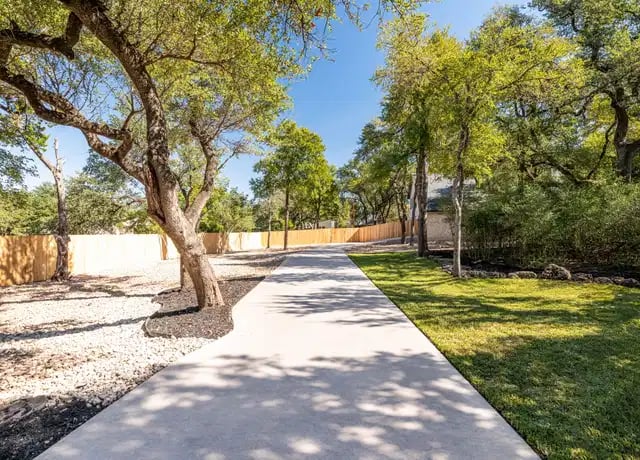
Most Balcones Village homes are custom-built single-family houses from the 1970s and 1980s, which makes them roughly 35 to 55 years old. You'll find ranch, colonial, mid-century modern and contemporary styles on big, tree-shaded lots, and almost no two look alike.
That variety is exactly why I love this neighborhood. I'm a real estate agent with The Speed and Neuren Group at Compass Real Estate in Austin, Texas, and I'm also a licensed general contractor. So when I walk a house here, I'm looking at the charm and at what 40-plus years means behind the walls. I'll walk you through both. My favorite detail is how many of these homes open up to the back, with big windows that look out over the fairway or into a canopy of old oaks. You walk in the front door and your eye goes straight outside.
When was Balcones Village built?
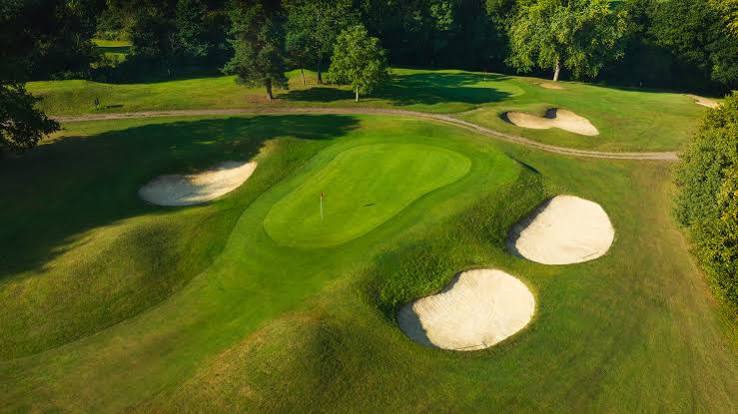
Balcones Village grew up around Balcones Country Club, which started as a nine-hole course in 1956, back when this was still remote Hill Country. The houses came a little later:
When | What happened |
|---|---|
1956 | Balcones Country Club opens as a nine-hole course |
Late 1960s | The first homes go up; the oldest date to about 1969 |
1970s and 1980s | Most of the neighborhood is built, house by house, by custom builders |
1990s to 2000s | A smaller number of newer homes and infill, with some built as late as 2010 |
So when you tour here, expect original construction from the '70s or '80s, usually with decades of updates layered on top. Some owners have redone everything, and others have kept things wonderfully original.
What do Balcones Village homes look like?
Balcones Village was built by a range of custom builders instead of one company's floor plans, so it never feels cookie-cutter. Many homes have side-entry garages, which keeps the streets looking clean, and plenty back up to the golf course or sit on wooded lots with a lot of privacy.
Feature | Typical in Balcones Village |
|---|---|
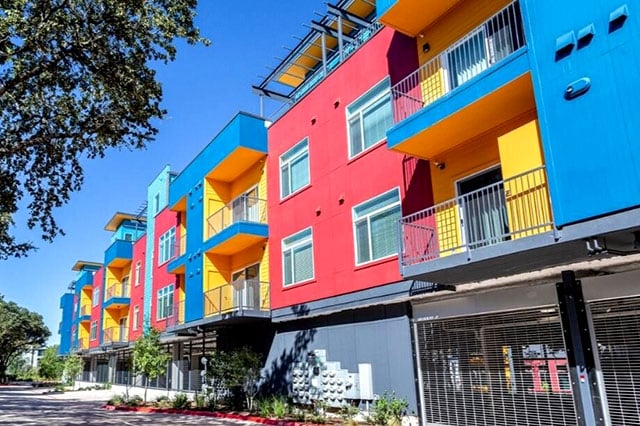
Home type | Mostly single-family, with a few condos and townhomes nearby |
Styles | Ranch, colonial, mid-century modern and contemporary |
Size | Usually 3 to 5 bedrooms; median 2,627 square feet |
Lots | Large, often around a third of an acre, with mature trees |
Median sale price | $980,000 (October 2025 through September 2026) |
Price range | $560,000 to $1,568,000 (same 12 months) |
Price per square foot | $359 (median) |
Days on market | 16 days (median) |
Prices swing a lot with condition. A house with original 1970s finishes and a fully renovated one on the same street can be hundreds of thousands of dollars apart. That's why I always look at what's been updated, not just the square footage.
What should you check in a 1970s or 1980s home?
This is where my contractor hat goes on. Homes from this era often have great bones, but some systems are at or past the end of their life. Here's what I'd ask about on a tour or during the inspection:
- Plumbing. Ask what the supply and drain lines are made of and whether any have been replaced. Old cast iron drains can be due, and homes plumbed from 1978 into the mid-1990s may have gray polybutylene supply lines, which are known to fail.
- Electrical. Check the panel's age and capacity, especially if you're planning an EV charger, a kitchen remodel or a pool. In a home wired between 1965 and 1973, have an electrician check for aluminum branch wiring.
- Foundation. Central Texas soils move. Look for cracks, sticking doors and any past foundation repair, and ask for the paperwork.
- HVAC and insulation. A newer system and extra attic insulation make a real difference in a Texas summer.
- Windows. Original single-pane windows are common here, and replacing them is one of the easier efficiency upgrades.
- Roof and gutters. Those mature trees are gorgeous, but they drop a lot on roofs and gutters.
- Asbestos and lead. Popcorn ceilings and older flooring can contain asbestos, so test before you renovate. Homes built before 1978 also come with a federal lead-based paint disclosure, so read it closely.
None of this is a reason to pass on a house you love. It's a reason to price the work in before you make an offer.
Balcones Village homes: quick answers
How old are the homes in Balcones Village?
Most were built in the 1970s and 1980s, so they're roughly 35 to 55 years old. The oldest date to about 1969, and a few were built as recently as the 2000s.
Are Balcones Village homes custom built?
Yes. The neighborhood was built by a range of custom builders rather than one production builder, so floor plans and styles change from house to house.
Does Balcones Village have an HOA?
There's a voluntary homeowners association, the Balcones Village/Spicewood HOA, with dues of about $50 a year. Membership is optional, but the deed restrictions apply to every property.
Want a contractor's eye on a Balcones Village home?
These are exactly the homes I love: one-of-a-kind houses on beautiful lots that really shine with the right updates. If you'd like help finding one, or want to know what a house could become, I'd love to walk it with you.
Hannah Edwards Real estate agent and licensed general contractor The Speed and Neuren Group | Compass Real Estate | Austin, Texas